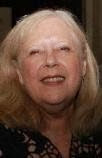
For bloggers hoping to increase readership and income, iwebis.com is a great resource. Mona Weathers, who writes under the pen name monawea, offers information about earning opportunities, social networking, communicating with readers and other topics of interest to those of us bitten by the blog bug.
Monawea says she blogs as a personal “outlet,” and for the extra family income. She tells her readers they’ll learn about the changing Web. She discloses the fact sometimes the reader will find sponsored reviews. And with humor, she promises, “You will not find out what I had for breakfast, lunch, dinner or any other meal in between.” She even notes there'll be occasional grammar and spelling errors.
She’s organized a “Mass Buzz” promotion for Blog Catalog members (blogcatlog.com). That event launches May 14.
I highly recommend a visit to Monawea’s blog—I’ve learned a lot during my own visits.
Meanwhile, if you have a blog tip or favorite site, feel free to post it in the comments section.
Wednesday, May 9, 2007


Friday, May 4, 2007
Ayaan Hirsi Ali’s ‘Infidel’ a best-seller bravely written
 When Ayaan Hirsi Ali scheduled an appearance at the University of Pittsburgh at Johnstown in Western Pennsylvania, Islamic leaders wanted her stopped. One Islamic center leader who had immigrated to America from Egypt told the Tribune-Review the author had “defamed the faith.” He further noted, "If you come into the faith, you must abide by the laws, and when you decide to defame it deliberately, the sentence is death."
Hirsi Ali’s lecture did take place, with security measures carefully put in place. Death threats are no surprise to anyone who’s read the book. The svelte native of Somalia walked away from her religion after realizing she had no personal freedom, not to mention a traumatizing experience with genital mutilation when she was very young.
“Muslim schools,” she writes, “reject the values of universal human rights. All humans are not equal in a Muslim school… there can be no freedom of expression or conscience. These schools fail to develop creativity—art, drama, music—and they suppress the critical faculties that can lead children to question their beliefs.” She wrote that passage in response to Islamic schools in Holland, the country she fled to after her father arranged her marriage to a complete stranger.
Hirsi Ali’s book is a page-turner in the grand memoir style. Her Ulysses-themed journey takes her from continent to continent, and she ultimately ends up in the one country that represents redemption for so many, America. The author finally admitted to herself and to the public, “I don’t believe in God.” That statement, along with revelations about the rigors and cruelties of her girlhood in an Islamic society, has earned her great praise from Western thinkers and vitriol from many Muslims, both male and female.
Her flight to America followed the death of a friend and collaborator, Dutch filmmaker Theo van Gogh. The two made a short film together. ‘Submission’ offered an artistic take on the violence Muslim women often face. A Muslim man who had come to Holland from Morocco stabbed and shot van Gogh to death because of the film.
Deeply pained by van Gogh’s death, the author refused to be silenced. “I am told,” Hirsi Ali reflects, “ ‘Submission’ is too aggressive a film. Its criticism of Islam is apparently too painful for Muslims to bear. Tell me, how much more painful is it to be these women, trapped in that cage?”
Wednesday, May 2, 2007
Fringe poet—putting poetry in the hands of readers

Last week I did a reading at Daytona Beach Community College. I had such a good time with the students. We hung around afterwards, talking to one another about poetry, writing and music.
Poetry is pure pleasure. My apart-ness is probably the primary reason I can enjoy it. I don’t have to answer to a university. I don’t have to publish or even submit unless I want to. As I toured with A Poetry Break, I spoke to truly diverse audiences, from children in economically challenged school zones to trade associations and organizations made up of educators on all levels. I read in saloons, at book club gatherings, at writers’ conferences. A special moment for me came when I read at the U.S. Library of Congress.
I don’t aim my work at a niche audience. The public is far more intelligent than many intellectuals believe. My book sold well, and is still carried in many stores. I hope the same will be true of the next collection. I’m in the final edit stages with that book. I’m talking to several different publishers.
A special moment during my DBCC reading came when students asked for a copy of one of the poems I read from the new collection, “Florida Aubade.” I wrote the poem for my husband. Coincidentally, South Carolina poet Jayne Jaudon Ferrer included that poem in her National Poetry Month Parade, and she was kind enough to let me know her readers enjoyed it.
I’ve followed a new poetry controversy, courtesy of a writeup in Poets and Writers about the Dorset Prize. This isn’t the first poetry contest controversy and I’m sure it won’t be the last. But every time I read about a poetry contest administered with questionable practices, I’m glad I’ve hung onto my money all these years.
When the publisher accepted 'A Poetry Break,' he gave me a modest advance and paid me industry-standard royalties. I worked hard to take the book to potential readers. It proved its merit in the marketplace.
That’s good enough for me. Meanwhile, I subsidize writing poetry by writing nonfiction for newspapers, wire services, magazines and Web sites. It’s a great arrangement.
__________________
Related Links
Jayne Jaudon Ferrer
Home pages for South Carolina poet Jayne Jaudon Ferrer
Dorset Prize Dustup
Kevin Larimer's article at Poets and Writers
Poetry Beat at The Writer magazine
Kay Day's column at The Writer online; premium content for subscribers only.
Subscribe to:
Posts (Atom)