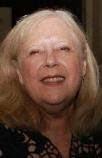
It’s about time poet David Kirby receives the attention he’s due. The professor teaches at Florida State University, with specialties in poetry and 19th century U.S. literature. We were delighted to see his inclusion as a finalist in poetry for the 2007 National Book Awards for 'The House on Boulevard St.'
Months ago, I was link hopping poetry sites on the Web, and I came across the Florida page at the Academy of American Poets. Kirby happens to be one of my favorites. When I saw his name wasn’t listed, I emailed to ask how the poets are selected. I received an unmemorable response. I suppose it’s a system of shared aesthetics, maybe? And politics, maybe? Poetry is rife with that. To prove my point, on that same Florida page, no mention is made of FSU’s Creative Writing Program, viewed by any number of poets and writers as one of the best in the nation. Then again, AAP isn’t the end-all for American poetry; it’s one of many organizations dedicated to the genre. Since the awards announcement, it is my sincere hope the AAP page will receive a quick enlightened edit. Kirby is included in other pages at the organization site, just not on the Florida page where you’d think he’d be up front and center.
I’ve pitched a Kirby article to some of my freelance clients, and I still have hopes I’ll get to write about him. Maybe now I will.
So we’re sending this fellow, whom we’ve never met personally but did view personally at a poetry do in Tallahassee and whose poetry we have often enjoyed, our sincere congratulations. He deserves to win the award, but there again, this is poetry and the genre has never and will never be a meritocracy. I’d say American poetry at the moment comes closest to being an oligarchy.
Read one of Kirby's poems, "Ode to Myself as a Rough Draft" at the Southeast Review, an FSU publication.
Showing posts with label poetry. Show all posts
Showing posts with label poetry. Show all posts
Thursday, October 11, 2007


Wednesday, September 5, 2007
Kim Addonizio’s new novel makes a gritty world shine

Kim Addonizio’s work first engaged me when I read her poems. There are gems in her collections, poems that just stop you cold. Poems like “Therapy,” “The Divorcee and Gin” and “Mermaid Song” should become classics—they’re like a favorite song replayed, instantly winging into your world like exotic little birds catching your eye. Her new novel My Dreams Out in the Street: A Novel
 is equally engaging.
 The book is one part mystery, one part love story and one part epic. Addonizio creates a character we might bump into on the street—Rita Jackson. Rita is down on her luck, a scavenger, a survivor. At 13, she witnessed the murder of her mother and as a young woman, her husband disappeared. She moves from shelters to corners in public parks to seedy hotels to a married man’s bed, perpetually homeless and confidently desperate. She’s always looking for Jimmy, and she’s always on edge. Addonizio gets into Rita’s head with passages like the following:
Now anxiety was with her all the time, even when she got drunk; when she slept, her dreams were full of vague problems she worried over, trying to fix whatever it was, not able to figure out what was wrong. Her dreams were inhabited by specters. Or wolves. They looked like dogs but they were wild. She would be running from them, and then come up against the dread certainty that there was something worse up ahead, and she’d stop cold in her tracks, and the fear would drill into her.
Rita’s journey yields encounters with others who are homeless, with cops, detectives, and managers who run flea-bitten hotels. She is an empathetic character, but one we are constantly shaking our head over as well. Her redemption lies in finding Jimmy, her husband whom she still loves, and in solving the riddle of why, after a nasty argument, he didn’t come back to her. Running parallel to Rita’s story is Jimmy’s story, and we slip into his thoughts as he remembers the wife he left. Whether the two will meet again, coupled with the way Rita and Jimmy feed off one another despite their separation, is the mystery that keeps the reader turning the page. Add in a sub-plot involving Rita witnessing a murder and fleeing thugs, and the tension just gets tighter.
Addonizio’s latest novel is a binge read of a book; close the covers and you miss Rita, her shortcomings and virtues all rolled into one. The book deserves a wide audience—here’s hoping it achieves widespread success long overdue this talented author.
Thursday, August 23, 2007
Should a poet plan on starving?
 I enjoyed sharing my poems with members and guests of a historical society in Jacksonville.
When I was young my mother, when I repeated my ambition to become a poet, advised me in typical no-nonsense fashion.
“Poets are dead before anybody knows who they are.”
Years later, as I worked steadily at trying to survive as a freelance writer, I continued to write poetry on the side. I published many poems, earning small amounts from educational publishers, magazines, contests and at least one Web site.
Finally the day came when a publisher agreed to invest his money in my collection, A Poetry Break
 .
.Because I was so grateful, I undertook a promotional campaign worthy of a new drug discovery. I spoke, I traveled and I blogged.
It paid off. The book did well enough for the publisher to take on my nonfiction book. And now that I am in the final edit on my new poetry collection, I’ve dialogued with several publishers about bringing it out.
I am also considering self-publishing, for a number of reasons. Here’s a list:
1. I do not work in the academic world and therefore have nothing to lose by self-pubbing.You are probably wondering why I have included reason #5. I could fill a book with support for that statement, but I came to learn many things as I pounded the pavement as an author. For one thing, bookstores and distributors order books, and then return the books that do not sell. This makes anticipating income very tricky. You may have a great royalty one quarter but then see your royalties decimated in the next due to returns. In addition, if your publisher is not one of the big houses, you will be very lucky to get reviews. In order to get reviews you or your publisher often must (1)schmooze and (2)politic. We were very lucky on my poetry collection. I count as a stellar moment in my life learning that a newspaper columnist, a complete stranger to me, reviewed my book, and so did others.
2. If I calculate royalties by way of self-publication, compared to royalties from self-publishing, my profits would increase by choosing the latter route.
3. I do not want to work as hard this go-round. Promoting the book consumed so much of my time my freelance nonfiction work suffered.
4. I would like total editorial control over the book.
5. The book biz sucks.
In addition to all that, if you are to succeed in today’s book world, you must write a book that targets a specific group of book buyers. I confess this is a simplified explanation, but will simply say if you write a book titled ‘How to Teach Your Dog to Play the Piano,’ you will have a ready line of dog lovers waiting for your signature at the nearest bookstore. Or if you develop a line of mysteries with a young sexy detective who is one part Jewish, one part Christian and one part Muslim and maybe one part Buddhist—I am imagining both the maternal and paternal lineage—you will have a runaway best-seller, having capitalized on a number of trendy niches.
Meanwhile, I ply my trade and count myself lucky to be able to earn money by writing columns and articles like the one you are reading right now. My poetry book still sells; I earn fees for speaking and talking about poetry and creative writing. I have learned to recognize those as numerous blessings.
Perhaps I am also learning to admit to myself that my mom was right. Or at least she was close.
What I am telling myself in response is that it really doesn’t matter. A poet is a poet and can’t do a thing about it.
An invitation
Visit my blog Covering Florida.
If you’re interested in writing for online sites, visit my column at The Writer. Web Savvy has covered digital cameras, writing style for the Web, and moving a publication from print to online. Available to premium subscribers only.
Wednesday, May 2, 2007
Fringe poet—putting poetry in the hands of readers

Last week I did a reading at Daytona Beach Community College. I had such a good time with the students. We hung around afterwards, talking to one another about poetry, writing and music.
Poetry is pure pleasure. My apart-ness is probably the primary reason I can enjoy it. I don’t have to answer to a university. I don’t have to publish or even submit unless I want to. As I toured with A Poetry Break, I spoke to truly diverse audiences, from children in economically challenged school zones to trade associations and organizations made up of educators on all levels. I read in saloons, at book club gatherings, at writers’ conferences. A special moment for me came when I read at the U.S. Library of Congress.
I don’t aim my work at a niche audience. The public is far more intelligent than many intellectuals believe. My book sold well, and is still carried in many stores. I hope the same will be true of the next collection. I’m in the final edit stages with that book. I’m talking to several different publishers.
A special moment during my DBCC reading came when students asked for a copy of one of the poems I read from the new collection, “Florida Aubade.” I wrote the poem for my husband. Coincidentally, South Carolina poet Jayne Jaudon Ferrer included that poem in her National Poetry Month Parade, and she was kind enough to let me know her readers enjoyed it.
I’ve followed a new poetry controversy, courtesy of a writeup in Poets and Writers about the Dorset Prize. This isn’t the first poetry contest controversy and I’m sure it won’t be the last. But every time I read about a poetry contest administered with questionable practices, I’m glad I’ve hung onto my money all these years.
When the publisher accepted 'A Poetry Break,' he gave me a modest advance and paid me industry-standard royalties. I worked hard to take the book to potential readers. It proved its merit in the marketplace.
That’s good enough for me. Meanwhile, I subsidize writing poetry by writing nonfiction for newspapers, wire services, magazines and Web sites. It’s a great arrangement.
__________________
Related Links
Jayne Jaudon Ferrer
Home pages for South Carolina poet Jayne Jaudon Ferrer
Dorset Prize Dustup
Kevin Larimer's article at Poets and Writers
Poetry Beat at The Writer magazine
Kay Day's column at The Writer online; premium content for subscribers only.
Thursday, March 22, 2007
Spring fever throws a wrench into the writer’s handiwork
 My beagle hound Shadow is in the same boat I'm in. He can afford to be lazy.
The gush of spring is strong enough
to play with the globe of earth like a ball on a fountain...
--from ‘Craving for Spring’ by D. H. Lawrence
Florida can be very challenging to productivity as spring comes on. I can’t really figure why. Here, there are no sharp definitions between seasons. A coral rose on my deck bloomed on Christmas Eve, an event that struck me as so amazing I wrote a poem about it. My reaction to that aromatic bloom was followed by the realization I was gauging winter here by upcountry Carolina standards, where snow always falls a few times each season and temperatures require a quilt on the bed most of the time.
I don’t think I’ve used a quilt since moving here four years ago.
Today I watched an assortment of cardinals, squirrels, and tiny sparrows take turns at the seed I scatter, and my restlessness made me want to turn away from work. I couldn’t do that. In the business of writing, especially if you’re an independent, spring is the go-crazy season.
I thought of Lawrence’s poem, ‘Craving for Spring,’ and realized the line that includes "play with the globe of earth like a ball on a fountain" perfectly describes what spring does to my brain.
Window-gazing fits most writers’ personalities—we are, after all, famous procrastinators. I must remind myself to take time to procrastinate soon.
Thursday, March 8, 2007
Talking James Dickey with Flagler's creative writers
On Tuesday I drove down Historic U.S. 1, heading for Flagler College in St. Augustine. This highway runs alongside the East coast of the United States, beginning in Key West and ending in Maine near Canada’s border. The stretch I’m on still bears vestiges of mom-and-pop tourist stops from an era before the nightmare that has become I-95. There are long stretches of green space.
You can follow U.S. 1 straight into St. Augustine where Flagler College is located. My mission for the trip involved talking with creative writing juniors and seniors—mostly English majors—about James Dickey, his poetry, and what it was like to study with him as a student and to maintain ties with him until his death.
Dr. Carl Horner, director of Creative Writing at the college, had arranged my visit. The comfortable room in the Flagler College Library located on Sevilla Street was perfect—large enough to offer ample seating but not so large that intellectual intimacy suffered.
The day was consummate Florida—bright sunshine, a nice breeze, and temperate. As I began talking about my former professor, thoughts of my own days at the University of South Carolina eased into my consciousness. If ever there were halcyon days, the early 70s at USC fit that descriptive for me.
I shared with the students how Dickey had remarkable recall of long passages of poetry and literature. I shared the opportunities our professor gave to us—poets like Richard Wilbur, Allen Tate and Yevgeny Yevtushenko visited our campus.
Dickey expected those of us accepted into his classes to work hard ourselves—to learn about literature, to seek our own particular paths, and to develop our own voices. I read several of his poems, among them, ‘The Sheep Child’ and ‘Adultery.’ Those are probably my two favorites of all his poems.
Dr. Horner had talked with the students about Dickey’s ability to slip into the personae of animals as subjects and motifs in his poems. ‘The Sheep Child’ has these haunting lines, speaking from the persona of a half-man/half-beast creature stored in a glass jar:
We moved on to subjects like the poetry of Horace, and his declaration to future readers—he knew he would be remembered—and now his voice carries across millennia.
I read three of my own poems and touched on my life as an independent journalist and poet.
Many of the students said they plan to teach; one young woman wants to be a freelancer. A young man told me one of his favorite poets is Ted Hughes, and he enjoys exploring the work of Hughes and Plath.
This was a remarkable group of young people—very vested in the time we spent together, very attentive. I sensed the same sort of inquisitive spirit nurtured by the professors at their college, much in the same way mine was nurtured by the incredible writers at my own college. The students projected an open-minded demeanor, unlike the attitudes of some who embrace a strident, narrow aesthetic, refusing to accept views and styles that differ from their own.
There was a young woman from Charleston--those of us from Carolina call it the "Holy City." It was nice to see someone from my home state.
The campus itself complements the artistic spirit. The Ponce de Leon hotel, now a mainstay on the 19-acre campus, is a work of art listed on the National Register of Historic Places. The college’s namesake Henry M. Flagler, a partner with John D. Rockefeller in the Standard Oil Company, hails from a historical period when buildings were akin to sculpture, made not only of brick and mortar but of inspiration and vision as well.
Dr. Horner and I, once the program concluded, strolled over to the market district, walking along Hipolyta street and ending up at The Bunnery for some very fine coffee and pastry. He spoke enthusiastically about all the poets he and the classes are studying, how important it is to him for his students to succeed. Dr. Horner is the sort of professor you could listen to all day long. His passion for writing and his knowledge of literature are amazing.
I thought how lucky they are, those bright young minds that have found such an academic haven small enough to nurture but resourceful enough to offer them many paths to a future of choice.
I thought how lucky I was to have experienced the same many years ago with a remarkable professor whose voice still whispers in my ear from time to time, whose encouragement still comforts me even in my darkest hours.
____________________
This week is Communication Week at Flagler College, with a number of authors and media professionals visiting the campus. (My visit was independent of these activities.)
You can follow U.S. 1 straight into St. Augustine where Flagler College is located. My mission for the trip involved talking with creative writing juniors and seniors—mostly English majors—about James Dickey, his poetry, and what it was like to study with him as a student and to maintain ties with him until his death.
Dr. Carl Horner, director of Creative Writing at the college, had arranged my visit. The comfortable room in the Flagler College Library located on Sevilla Street was perfect—large enough to offer ample seating but not so large that intellectual intimacy suffered.
The day was consummate Florida—bright sunshine, a nice breeze, and temperate. As I began talking about my former professor, thoughts of my own days at the University of South Carolina eased into my consciousness. If ever there were halcyon days, the early 70s at USC fit that descriptive for me.
I shared with the students how Dickey had remarkable recall of long passages of poetry and literature. I shared the opportunities our professor gave to us—poets like Richard Wilbur, Allen Tate and Yevgeny Yevtushenko visited our campus.
Dickey expected those of us accepted into his classes to work hard ourselves—to learn about literature, to seek our own particular paths, and to develop our own voices. I read several of his poems, among them, ‘The Sheep Child’ and ‘Adultery.’ Those are probably my two favorites of all his poems.
Dr. Horner had talked with the students about Dickey’s ability to slip into the personae of animals as subjects and motifs in his poems. ‘The Sheep Child’ has these haunting lines, speaking from the persona of a half-man/half-beast creature stored in a glass jar:
And, through my immortal waters,
I meet the sun's grains eye
To eye, and they fail at my closet of glass.
We moved on to subjects like the poetry of Horace, and his declaration to future readers—he knew he would be remembered—and now his voice carries across millennia.
I read three of my own poems and touched on my life as an independent journalist and poet.
Many of the students said they plan to teach; one young woman wants to be a freelancer. A young man told me one of his favorite poets is Ted Hughes, and he enjoys exploring the work of Hughes and Plath.
This was a remarkable group of young people—very vested in the time we spent together, very attentive. I sensed the same sort of inquisitive spirit nurtured by the professors at their college, much in the same way mine was nurtured by the incredible writers at my own college. The students projected an open-minded demeanor, unlike the attitudes of some who embrace a strident, narrow aesthetic, refusing to accept views and styles that differ from their own.
There was a young woman from Charleston--those of us from Carolina call it the "Holy City." It was nice to see someone from my home state.
The campus itself complements the artistic spirit. The Ponce de Leon hotel, now a mainstay on the 19-acre campus, is a work of art listed on the National Register of Historic Places. The college’s namesake Henry M. Flagler, a partner with John D. Rockefeller in the Standard Oil Company, hails from a historical period when buildings were akin to sculpture, made not only of brick and mortar but of inspiration and vision as well.
Dr. Horner and I, once the program concluded, strolled over to the market district, walking along Hipolyta street and ending up at The Bunnery for some very fine coffee and pastry. He spoke enthusiastically about all the poets he and the classes are studying, how important it is to him for his students to succeed. Dr. Horner is the sort of professor you could listen to all day long. His passion for writing and his knowledge of literature are amazing.
I thought how lucky they are, those bright young minds that have found such an academic haven small enough to nurture but resourceful enough to offer them many paths to a future of choice.
I thought how lucky I was to have experienced the same many years ago with a remarkable professor whose voice still whispers in my ear from time to time, whose encouragement still comforts me even in my darkest hours.
____________________
This week is Communication Week at Flagler College, with a number of authors and media professionals visiting the campus. (My visit was independent of these activities.)
Tuesday, February 27, 2007
Heartland stories and celebrities
I will write the evangel-poem of comrades and of love.Globally, we’re a celebrity-driven culture. In America, personalities like Anna Nicole Smith and Britney Spears get way more ink than is justified by their contributions. Other countries have their own celeb circuits. Otherwise, bin Ladin wouldn’t be a household name and Bollywood favorite Hrithik Roshan wouldn’t be in hot water after making harmless remarks about two other celebrities’ height.
--Walt Whitman
My favorite stories to write are what I call “heartland stories.” I like to write about the woman or man who lives a life outside the spotlight, but whose contribution is significant just the same. One such story at the moment belongs to Gilmer Hernandez. At my Covering Florida blog, there’s an update to the Family Security Matters story I wrote. Last night, as I did phone interviews for the update, a friend of Hernandez told me the national media isn’t picking his story up.
That’s a sad state of affairs. Issues over illegal immigration have both major political parties muddled, and many of us are muddled as well. For me, the issue has nothing to do with those legally entering the country. It has to do with the fact we’re fighting a war abroad to protect our freedoms, but a significant vulnerability, one that will surely be exploited at some point, exists close to home. It has to do with the fact that politicians and statesmen in many nations are doing nothing to improve the lives of their people, despite resources available to them.
Another cause that governs what I write is freedom of speech. I learned about the plight of blogger Kareem Amer, an Egyptian facing four years in prison for writing critical remarks about Islam and President Hosni Mubarak. There’s an update today at Free Kareem!. Amer’s lawyers are appealing his sentence but only in hopes of decreasing the length of it. Amer’s advocates have opened a store to raise money for his efforts.
A centerpiece in my new nonfiction book tells the story of a Florida man, Taylor Wells, convicted of felony murder in 1994. He was 18 years old, several weeks shy of graduating high school. In the real world, he harmed no one. In the legal world, he was judged guilty enough to receive a life sentence. Others who were instrumental in the 1993 crime have already been released from prison. The difference between these actors in the crime: their attorneys. Taylor’s public defender was at a distinct disadvantage for a number of reasons.
A goal I’ve had since beginning my career involves what I call “lastingness.” I like to write for publications that have been around for a long time, where my work will remain archived. Among these pubs are Christian Science Monitor and The Writer. And of course one reason I write poetry is the lasting quality. It has a good shelf life. I recently wrote a poem about a young homeless man I talk to when we go to our favorite restaurant. I asked myself who else would tell his story.
As a writer, I can sometimes strengthen the voice of the disenfranchised or the non-elite. I figure it’s a small way to contribute something to a world that has returned so much to me, despite a rough patch at the beginning.
Subscribe to:
Posts (Atom)